The layer that holds
multidisciplinary care together.
A patient with a new cancer diagnosis sees five or six specialists in their first month. Every one of them gives their input, but no one is holding the whole picture. HAVEN is one touchpoint with an AI layer that reads across every discipline and remembers everything said.
One patient. Multiple clinicians. One picture.
Every discipline says something that matters to another. The surgeon’s recovery window, the dietitian’s weight-loss flag, a sleep concern mentioned once at intake. HAVEN reads across all of it, reconciles it, and can show you the exact sentence behind every line.
A synthetic patient’s care, read across every discipline. Every detail traces to the sentence that produced it.
- Clinician
- Supportive service
- Cited moment
- Cross-discipline link
Newly diagnosed prostate cancer. Multiple clinicians in his first month, none of them holding the whole picture. HAVEN does. Every detail on this page traces back to the sentence that produced it.
Select any cited moment for its source line.
No source, no answer. Every surfaced claim shows the sentence, the speaker, and the timestamp behind it.
A new cancer diagnosis is overwhelming.
Information and accountability are regularly lost across appointments.
It is the single most commonly unmet supportive-care need. Five or six specialists, each excellent, each holding one slice. And a patient left to carry everything between them.
“Telehealth, as it exists today, is one specialist in a flat video window. It does not solve our problem. Our problem is orchestration.”
Operational leadership, MGB Cancer Institute
One touchpoint for the patient. Every discipline underneath.
AI that enables cross-discipline intelligence, for patients and providers alike. One presence that reads the whole record, remembers what was said, and reconciles it across the team.
- 01Before the visit
Your day, made clear
What's happening and why, sequenced for a person, not a chart.
Before anything begins, the companion lays out who the patient will see, in what order, and what each conversation is for. It helps draft the questions worth asking. The mental list a complex patient already carries, written down in language they can act on.
“You'll first speak with a nurse to review your history, then meet your three cancer doctors together, and afterwards talk to a dietitian because of your weight loss.”
Plate 01 / 04 - 02Every answer traced
Nothing gets lost
Everything said in the clinic, recallable afterwards, with its source.
Ask what a doctor said, and the companion doesn't guess. It retrieves the sentence the clinician actually said, with the speaker and the timestamp. No source, no answer. The single biggest source of distress in complex care, “I don't remember what they said,” answered from the record.
“You asked what to expect after surgery. Your surgeon said: about six weeks before you're back to your normal activity.”
Plate 02 / 04 - 03The differentiator
Crosses disciplines
Reconciles what different providers told you. The work no single specialist does.
When something said to the nurse matters for the oncologist, the companion carries it. When two recommendations need to fit together (a nutrition flag against a treatment date, a sleep concern against a referral), it reconciles them and surfaces the tension while the team can still resolve it. This is the part everyone else leaves to the patient.
“Your dietitian flagged weight loss, and your oncologist wants it addressed before scheduling treatment. Want to raise that with the team today?”
Plate 03 / 04 - 04After the visit
Leave knowing what comes next
A patient leaves with what the team agreed, in their language, with the calendar that follows.
Afterwards, the companion drafts a plain-language synthesis: what was decided, what to do next, and when. A patient-facing summary, not a clinical note. It's reconciled with the record, so no one has to reconstruct the day from memory or conflicting voicemails.
“Today your team agreed on radiation followed by hormone therapy. Call this number to schedule imaging. Complete the labs before May 30. Your next check-in is June 12.”
Plate 04 / 04
Nothing gets lost.
Every answer traced back to what was actually said. Everything said in the clinic, recallable afterwards, with a source or not at all.
- 01
It retrieves, it doesn't guess
Most health AI generates an answer and hopes it is right. Ours is not allowed to generate a claim at all. It retrieves the sentence the clinician actually said, with the speaker and the timestamp, and shows the patient the source.
- 02
A second pass, or it falls back
A second pass checks every sentence against its citations. If a sentence isn't supported, the whole answer is thrown away and it falls back to the raw quote. There is no confident paraphrase without a source behind it.
No source, no answer.
Today this runs against a synthetic patient’s recorded appointments. Nothing is pointed at real patients yet, by design. HAVEN is pre-pilot. The retrieval-and-verify discipline is built first, before any real record is touched.
The same platform creates new value for every stakeholder.
Telehealth moves one visit onto a screen. We coordinate across all of them.
Everyone solves one slice. Nobody coordinates and faces the patient.
- For patients01
- One hub for the whole journey, not a portal per specialty.
- Clarity on what's happening and why, plus always-on support between visits.
- Less travel, less repeating themselves, less lost in the gaps.
- For clinicians02
- Less time spent on generic patient education.
- Easier cross-disciplinary collaboration: concerns arrive already surfaced.
- It removes work rather than adding another system to feed.
- For cancer centers03
- Patient satisfaction and a brand patients recommend.
- More effective capacity from the specialists they already have.
- Ancillary and supportive care that actually gets used.
- For payers04
- Lower treatment burden through earlier, coordinated decisions.
- Better coordination across a fragmented care team.
- Aligned to CMS goals for navigation and supportive care.
“Maybe the next innovation in cancer treatment isn’t a novel therapeutic, but a new way to deliver cancer care, one that needs to bring everyone into the fold.”
“Our research in science is getting beyond what our patients can understand. If we can’t communicate an understandable, cohesive plan to them, then it won’t get done.”
HAVEN was developed inside the cancer clinic.
We are a team of three. For the past eight months we have been embedded at Mass General Brigham: sitting with patients, shadowing surgeons and dietitians, mapping schedules, interviewing leadership. We wrote need statements before we wrote a single line of code. HAVEN is the answer that emerged.
Clinical and financial leadership at the MGB Cancer Institute have reviewed the model and expressed interest in piloting. The first pilot will run there.
Melinda, Caitlyn & Emily
- Origin
- Harvard Medical School HealthTech Fellowship · 2025-26
- Clinical home
- Mass General Brigham Cancer Institute
- Method
- Stanford Biodesign · 100+ ideas screened against strict criteria
- Status
- Pilot in design
The team behind the drafting table.
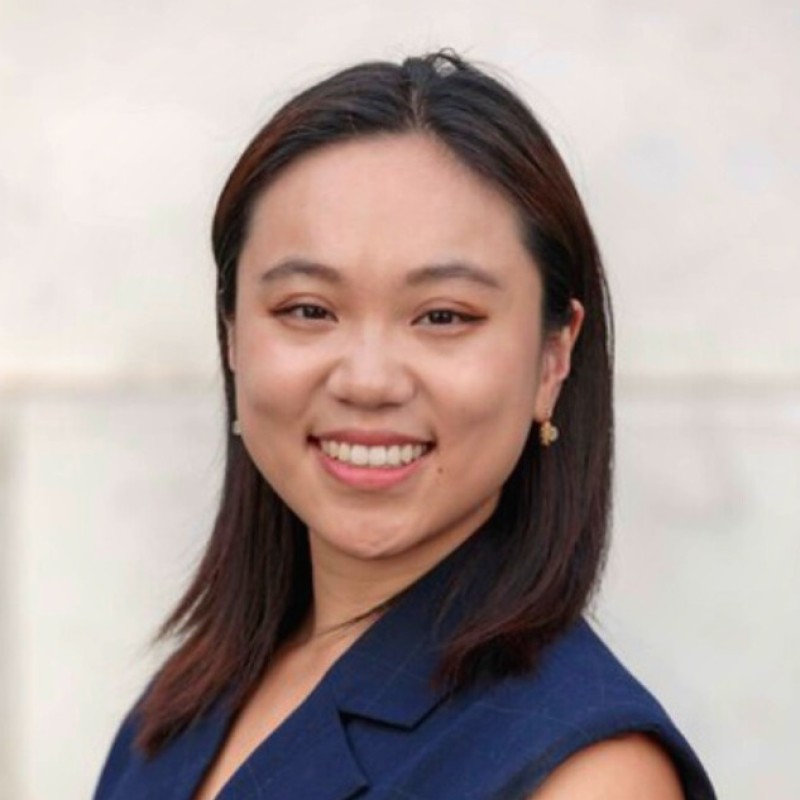 Melinda HuChief Executive
Growth at digital health startups. Sells into health systems, scales products beyond the pilot.
Boston · NYCCo-founder · 01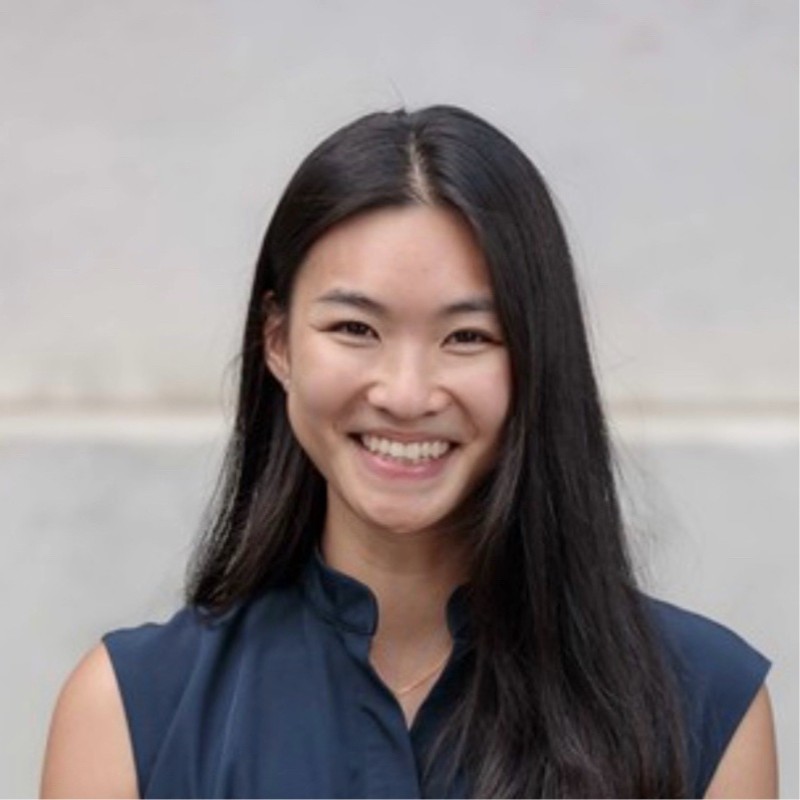 Caitlyn LooMDChief Operating & Financial
Physician trained in Ireland. Health policy and early-stage healthtech VC across Singapore, Ireland, the US.
Boston · SingaporeCo-founder · 02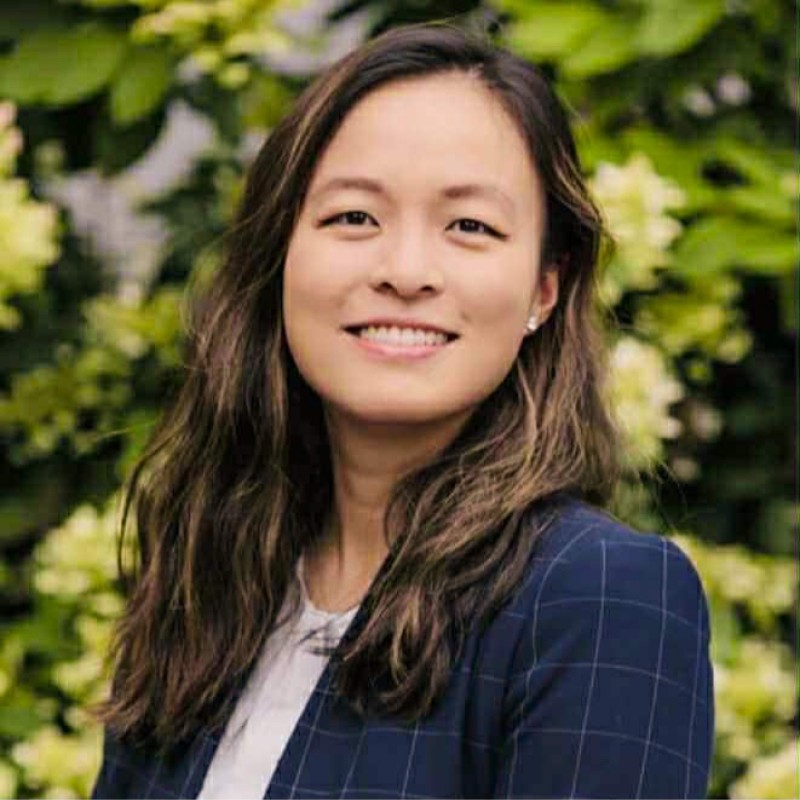 Emily HuangMDChief Medical
Clinical fellow in urologic oncology, combined Harvard program. Practices at Mass General Brigham, treating prostate, bladder, and kidney cancer.
BostonCo-founder · 03